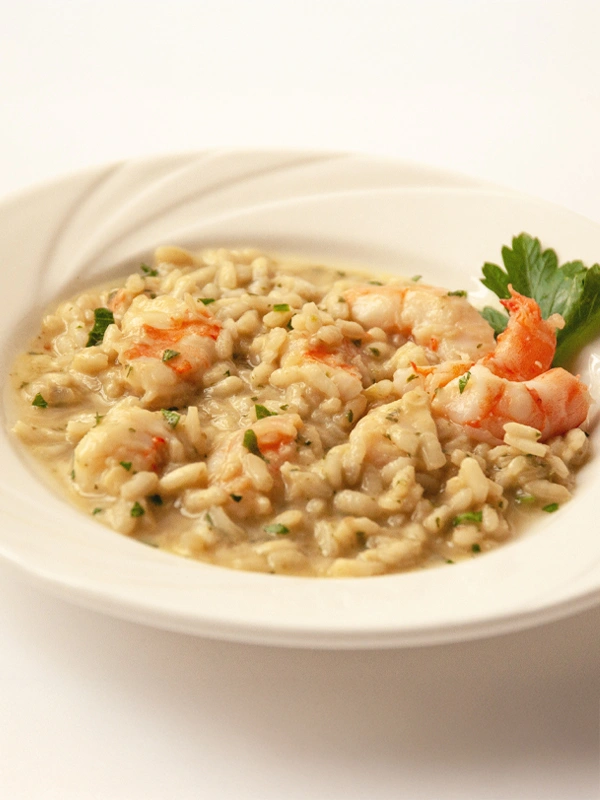
Risotto, prized for its creamy texture and rich taste, is a staple of Northern Italian cooking that is typically served in smaller portions as the first course, or primi piatti. While risotto may have an intimidating reputation because of the attention it requires, risotto is easy to prepare and never fails to impress. No easy risotto-cooking hacks needed here, just follow the steps below and you’ll soon become a risotto master.
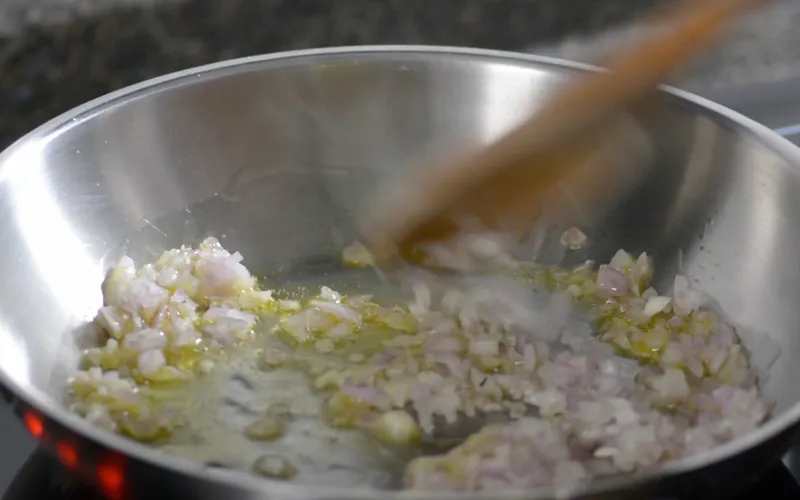
The first step in making risotto, soffritto refers to creating a base of flavors for the risotto. Depending on preference and your recipe, the ingredients in this step are aromatics such as onion, shallots, celery, carrots, garlic and herbs. Sauté aromatics over a low flame until softened, but not burnt, in butter, olive oil, or a mix of the two. They key to il soffritto is chopping the aromatics as finely as possible to ensure they blend smoothly into the rice, not stand out as large pieces.

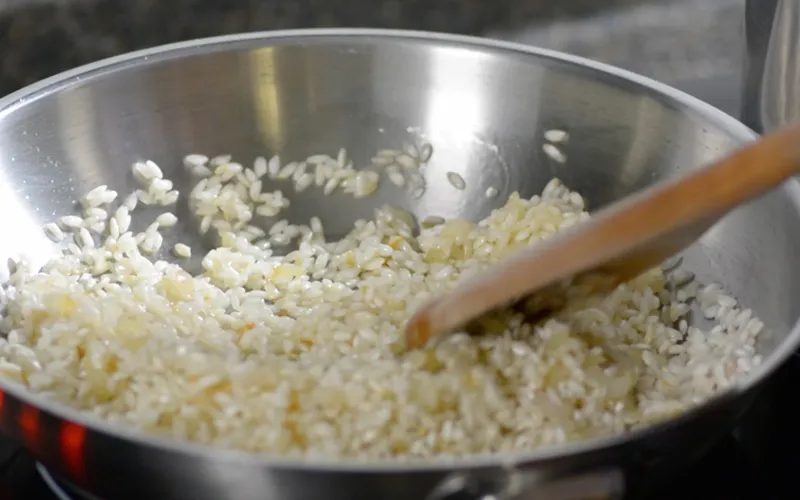
Once the soffritto has softened, the second step of risotto is toasting the rice to add a base of flavor to the grain. Turn the flame to medium, add rice to the pot, and sauté for 2-3 minutes to remove moisture from the grains and coat with flavors from the soffritto. Stir constantly to avoid sticking and burning.
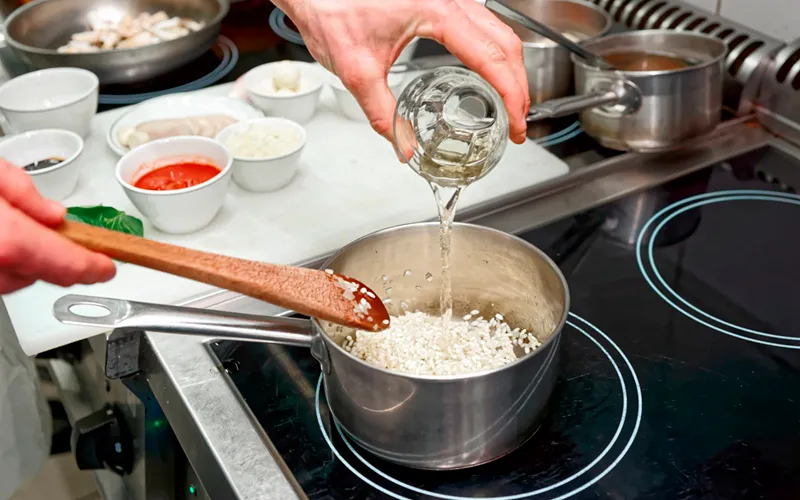
This step adds more flavor to the grains, usually in the form of white wine or another acidic liquid, and deglazes the pan. Although this step isn’t always necessary, the added acidity provides another depth of flavor in the dish. Sfumato means to smoke or make steam, and once you add the wine, a puff of steam will come out of the pan. When it settles and the alcohol cooks off, you’re ready for the next step.
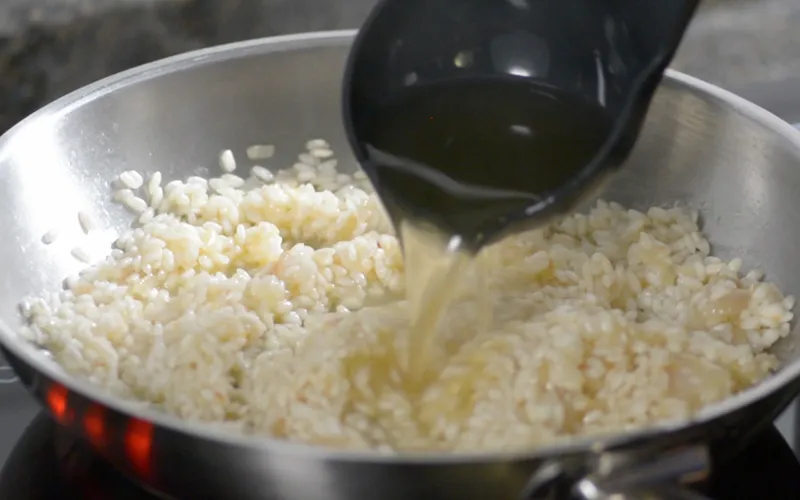
La cottura refers to the actual cooking of the grains by slowly introducing liquid to the pan. The key to this step is adding hot stock, one ladle at a time, and cooking until almost fully absorbed before adding more stock and repeating until the rice is fully cooked. Frequent stirring will ensure the rice is cooked evenly, but over-stirring will add too much air and cause the rice to cool. Over a medium-low flame to control cooking, continue adding stock in ½-1 cup increments until rice is al dente, about 15-20 minutes. Begin testing grains for doneness after about 10 minutes of cooking. If the risotto is crunchy, it isn’t fully cooked and if mushy, it’s overcooked.
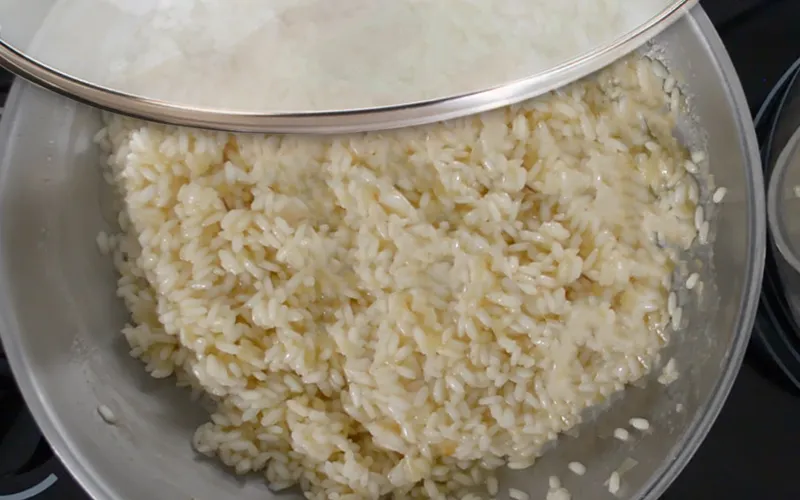
Resting the risotto is important, as this helps lower the temperature for the final stage which is the addition of fat and other ingredients. Remove the pot completely from heat, cover and let rest for 2-5 minutes.
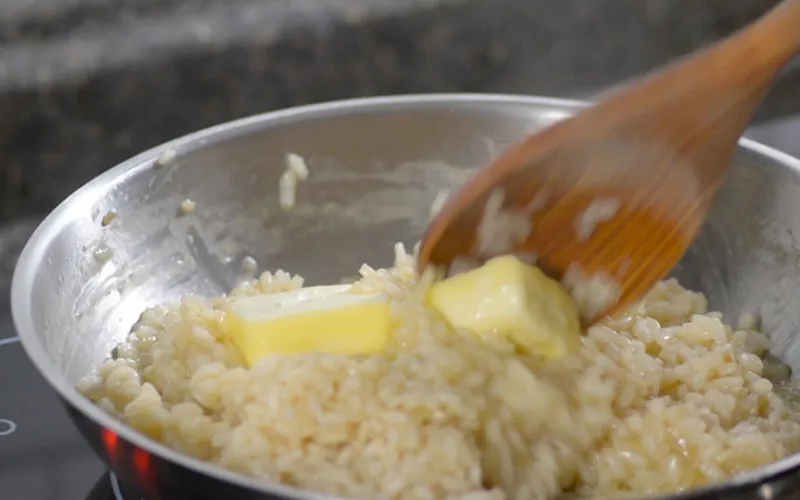
La mantecatura is everyone’s favorite stage because you add more flavor and creaminess to the risotto though the addition of butter, cheese or oil. Grab your rested risotto and cold butter or cheese, gently stirring until melted and evenly distributed. If the consistency of your risotto is too thick, add small increments of broth or hot water and mix until desired consistency is reached. Serve immediately, as the starches will set and your risotto will lose its smooth consistency if left out.
If you’re more of a visual learning we have a video that will help you follow along and make the perfect risotto.
As with any meal, they key to producing a cohesive, delicious dish is premium quality ingredients. The smoothness of risotto comes from the way it’s cooked: slowly adding liquid to coax the starches from the grain for a creamy texture while the core of the rice kernel stays al dente. To achieve this texture, the rice used must be a plump, short-grain rice with a high starch content. The most common types of rice used in making risotto are Arborio and Carnaroli, both high in starch content and native to the northern region of Italy. Although extremely similar, there are small differences between the two:
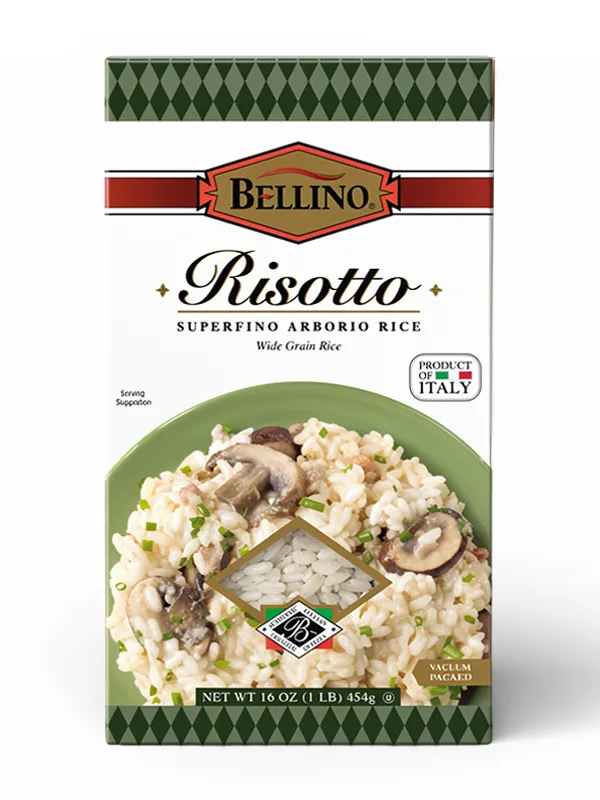
Bellino Risotto Arborio Rice, a product of Italy, is made from 100% arborio wide grain rice. Pair with vegetables or shrimp for a delicious entrée. Our arborio rice is vacuum packed to preserve freshness.
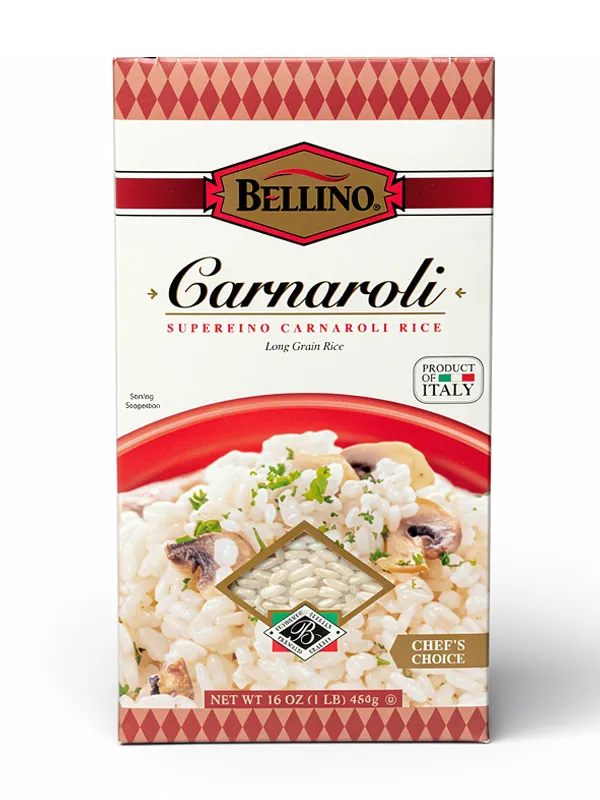
Carnaroli is considered the best Italian rice by chefs around the world and is perfect for risotto, salads and gourmet special occasions. Vacuum packed to maintain the quality of the rice as a product of Italy, Bellino Carnaroli stays al dente and mixes well with a variety of ingredients.
Packaging, nutrition facts and ingredient statements are
subject to change. For the most up to date information
regarding a product, please refer to the product’s packaging.